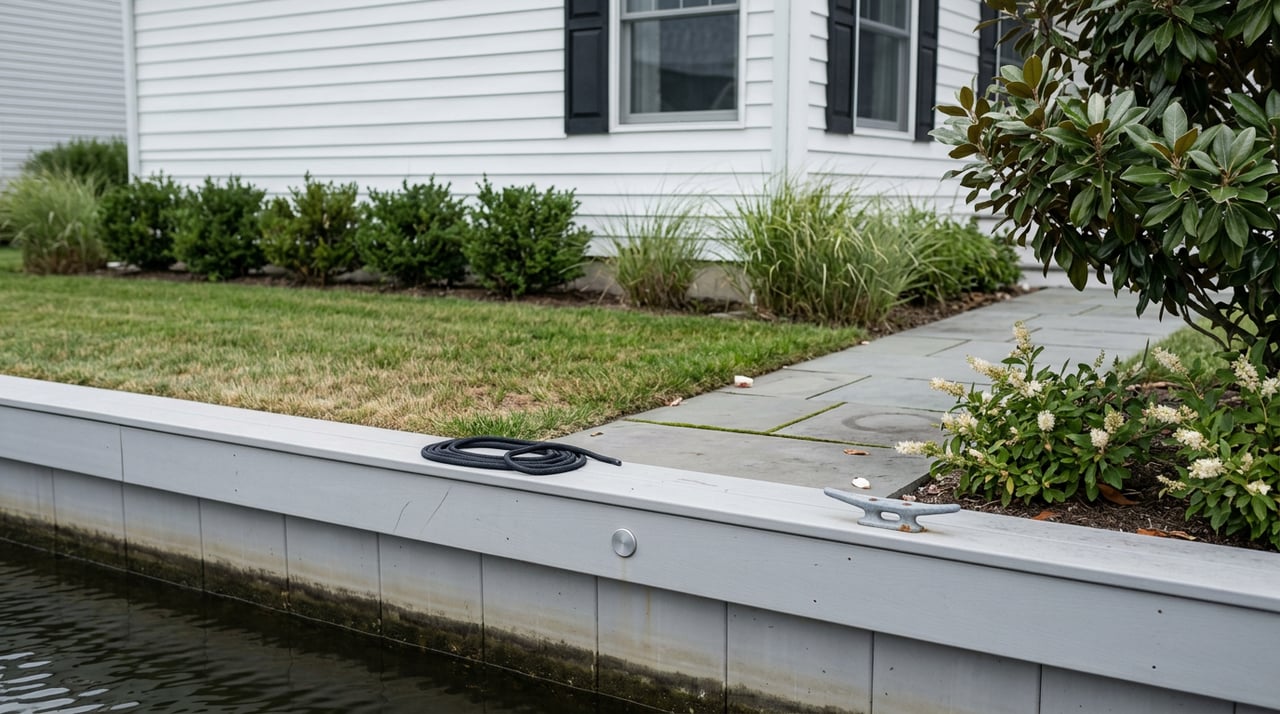
Why Every Massapequa Canal Listing Now Has to Answer the Bulkhead Question
August 13, 2026
August 13, 2026
A seller on a canal in Massapequa Shores can spend a weekend agonizing over paint colors and staging furniture, then sign a disclosure form without giving a second thought to the retaining wall holding their backyard out of the water. That instinct made sense for years. It stopped making sense in March 2024.
New York's Property Condition Disclosure Act changed that spring, and the change lands harder on canal-front sellers than on almost anyone else in the South Shore market. Before the amendment, a seller could hand a buyer $500 at closing and skip the state's 48-question disclosure form entirely. That workaround is gone. Every residential seller in New York now has to complete and sign the full form, and it asks about structural integrity, a category that on a canal lot includes the bulkhead itself. The form also directs buyers to check public "wetland and FEMA's current flood insurance rate maps and elevation certificates," which puts the water line of the property in front of the buyer before they ever schedule an inspection.
For a Massapequa seller whose bulkhead has a lean, a soft spot, or thirty years of unaddressed corrosion, that is the whole ballgame. The question is no longer whether to mention it. It is whether to fix it first or price around it.
Bulkhead work in Massapequa does not move at the speed of a typical home repair. The unincorporated areas of the Town of Oyster Bay, which cover most of Massapequa's canal communities, require sign-off from more than one authority before a shovel goes in the ground. According to the town's own building permit instructions, residential bulkhead and dock projects need:
The town code governing waterway construction adds more paperwork on top of that: a verified application, a short environmental assessment form, and a radius map showing every structure, dock, and bulkhead on the two neighboring properties on each side plus anything directly across the canal. None of this is a same-day process.
That timeline matters because of the disclosure change above. A seller who discovers a bulkhead problem during a pre-listing walkthrough no longer has the option of quietly crediting a buyer and moving on. They either start the permit process well before listing, or they list with a known issue on the disclosure form and negotiate from there. A multi-agency approval process does not bend to fit a buyer's financing contingency window, which makes the repair-or-disclose decision one a seller has to make early, not one they can leave until an inspector finds the problem.
Marine contractors working the Long Island coast this year price bulkhead work by the linear foot, and the range is wide enough to change a seller's math depending on material and scope.
| Scope | Typical cost per linear foot | What it covers |
|---|---|---|
| Minor repair (small cracks, localized erosion) | $100 to $250 | Extends the life of an otherwise sound wall |
| Standard replacement | $100 to $800 | Timber or vinyl, most common on canal lots |
| Concrete replacement | $400 to $1,200 | 50-plus year lifespan, highest upfront cost |
| Complex marine construction | Can exceed $1,200 | Difficult site access, engineering requirements |
A full replacement on a typical 100-foot residential run lands between $15,000 and $60,000. That is not a rounding error in a listing budget, and it is exactly the kind of number that shifts a seller's decision between repairing now and disclosing later.
Footage is not an abstraction in this market either. Sellers in Massapequa's canal neighborhoods already treat linear feet of bulkhead as a marketed feature, not a footnote. A newly renovated home in Biltmore Shores lists its end-of-canal views alongside 45 feet of bulkhead. A South Massapequa property on a two-thirds-acre lot markets 80 feet of marine bulkhead and a boat lift as headline features. A pre-construction listing in Massapequa Shores advertises 60 feet of new bulkhead and a private dock before the house itself is even built. And one Massapequa colonial in the District 23 school zone ties its bulkhead directly to insurance cost, citing newer bulkheading on a wide canal alongside a $742 annual flood insurance quote and no water intrusion during Hurricane Sandy. Buyers shopping this segment are reading those numbers closely, which means a seller who ignores their own bulkhead's condition is leaving the comparison to someone else.
Once the permit realities and the disclosure requirement are both on the table, the choice for a Massapequa canal seller comes down to two paths.
Replace before listing. This is the more expensive option upfront, but it turns a liability into a selling point, the same way the listings above turned strong footage and documented flood performance into marketing language. A seller who starts the DEC and Army Corps approval process months before their target listing date can walk into showings with a completed project and a clean disclosure form, no negotiation required.
Disclose and price around it. This works when the bulkhead is still functional but aging, not failing. The seller answers the disclosure form honestly, prices the home to reflect the coming expense, and lets the buyer decide whether to negotiate a credit or take on the repair themselves after closing. This path avoids the permit timeline entirely, but it depends on an honest read of the wall's actual condition, not a guess.
What does not work anymore is the quiet middle path: fixing nothing, saying nothing, and hoping the disclosure form gets treated as boilerplate. That option closed with the March 2024 amendment.
Does every waterfront home in Massapequa need a new bulkhead before it can sell? No. Plenty of canal homes sell with older bulkheads still doing their job. The disclosure form does not require a new bulkhead, it requires an honest answer about the condition of the one that is there.
What if the bulkhead was installed decades ago but looks fine? Age alone is not the same as failure. A visible lean, cracking, or soft wood are the signs contractors flag first. A seller unsure of the difference is better served getting a professional read before filling out the disclosure form than guessing.
Who actually approves a new dock or bulkhead in Massapequa? For most of Massapequa's canal lots, that runs through the Town of Oyster Bay's Department of Planning and Development, alongside the state DEC and the Army Corps of Engineers. Dock construction specifically also needs Town Board approval.
Can a seller still offer a credit instead of dealing with the bulkhead directly? Sellers can still negotiate a credit at closing for a known issue, but they cannot use that credit to avoid completing the disclosure form itself. The $500 opt-out that used to let sellers skip the form is no longer available under New York law.
A canal-front listing in Massapequa carries a piece of infrastructure that most inland South Shore homes never have to think about, and the rules around talking about it just got stricter. Sellers who treat the bulkhead as seriously as the kitchen or the roof walk into their listing with fewer surprises waiting for them at the inspection table.
If you're weighing whether to repair, disclose, or price around a bulkhead on your Massapequa canal home, the Kim Holland Homes Team has walked this exact conversation with waterfront sellers across the South Shore. Get in touch before you list, not after the first showing raises the question for you.
This article is general information, not legal, tax or financial advice. Consult a qualified professional about your situation.
Stay up to date on the latest real estate trends.

We offer unmatched local knowledge, expert negotiation, waterfront expertise, and proven marketing strategies to get homes sold faster and for top dollar.
Get In Touch With Our Team To Learn More

1000 Park Blvd Suite F
Massapequa Park NY 11762