Why a Lindenhurst Sale Has to Clear Village Hall Before It Clears the Bank
August 20, 2026
August 20, 2026
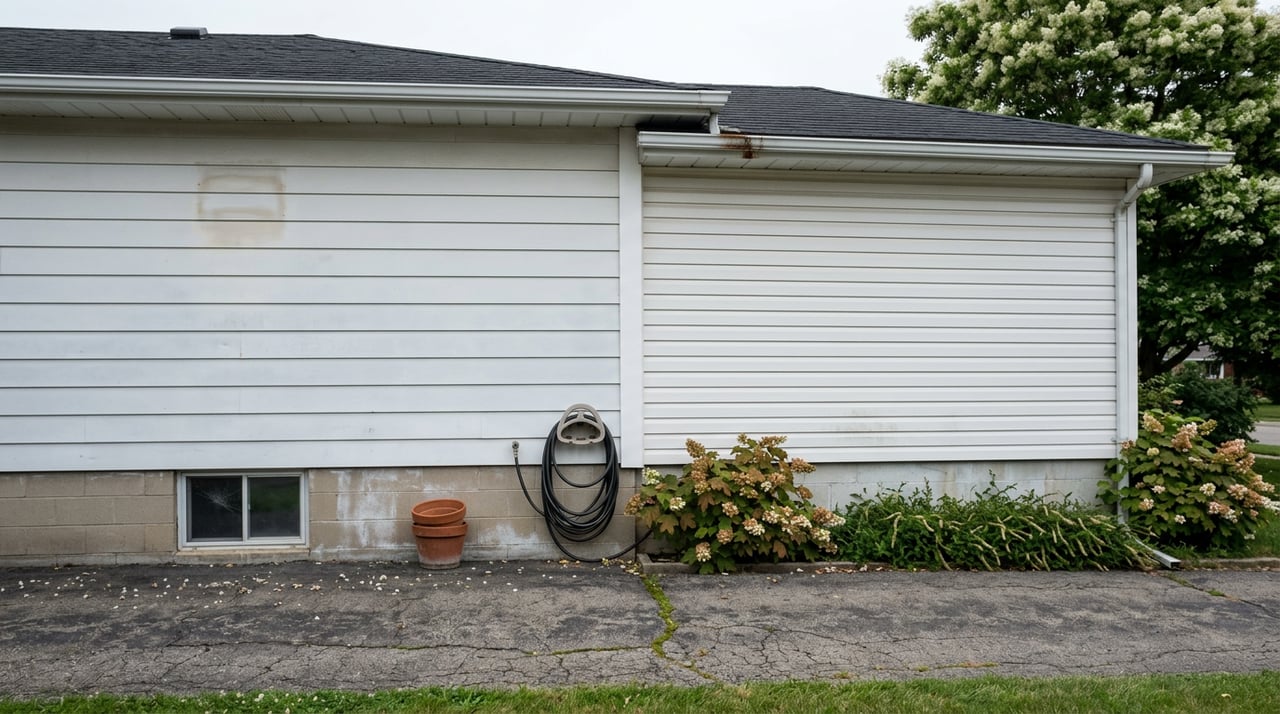
What happens when your buyer's mortgage underwriter asks for a Certificate of Occupancy on a finished basement that was never permitted?
If you own a home in the Incorporated Village of Lindenhurst, that question doesn't go to Suffolk County. It goes to the Village of Lindenhurst Building Department at 430 South Wellwood Avenue. Most South Shore hamlets are unincorporated, which means the town handles permitting on a broader, more generic timeline. Lindenhurst is a village. It runs its own building code enforcement, and that difference rarely comes up until an attorney's title search or a bank's appraisal flags a second kitchen, a converted basement, or an addition nobody ever closed out with an inspection.
This isn't a paperwork inconvenience you handle during attorney review. The decision to legalize or disclose has to be made before the home ever gets photographed for a listing.
The Village's Building Department handles permits, inspections, and Certificate of Occupancy searches for every property inside village limits. The Village’s building-permits page lists inspections Monday, Tuesday, Thursday, and Friday, from 10 a.m. to noon and 1 to 3 p.m. That's a narrower window than a typical mortgage underwriter expects, and it matters when a closing date is already on a contract.
Patch reports that most banks want a valid CO in place before closing. If there isn't enough time, sellers may be able to escrow funds if the bank approves. That's a negotiation sellers can avoid entirely by finding out where they stand months before listing, not during an attorney review period.
A large share of Lindenhurst's housing stock predates modern zoning, and it's common for older homes to carry a second kitchen, a finished basement with its own entrance, or an accessory unit that was never formally reviewed. The Village has a specific path for legalizing that use, but it isn't a rubber stamp.
The Village's two-family permit page lists these application materials: a completed application, a copy of the deed, a copy of the existing Certificate of Occupancy, a recent survey, floor plans showing every room and window, and a parking plan showing four off-street spaces at a minimum of 9 by 19 feet each. The application fee is $300, plus $20 per required sign
There are hard floors built into the rule, too. Under the Lindenhurst Village Code, a house needs at least 1,000 square feet of habitable space before it can even qualify, and the second unit itself has to be 300 square feet or more of actual open living area, not counting walls or garage space. Sewer connection has to be completed before the permit is granted, not after. And homes with a Certificate of Occupancy issued after January 1, 2008 aren't eligible for a two-family permit at all, which means a chunk of newer construction in the village simply can't go this route even if an owner wanted to.
The Village zoning code is equally direct about what can't be converted at all.
"The use of a cellar as a residential dwelling shall not be permitted."
The same section of the zoning code bars using boats, barges, or houseboats on village waters as a residential dwelling, a detail worth knowing if you're evaluating a canal property where a floating structure looks like extra living space.
The Village's 2025 building permit fee schedule sets a $25 non-refundable filing fee, plus a construction fee scaled to the estimated cost of the work, roughly $100 for the first $1,000 and $15 for every additional $1,000. File to legalize something that's already built, and that construction fee is doubled.
| File before work begins | File to legalize existing work | |
|---|---|---|
| Filing fee | $25, non-refundable | $25, non-refundable |
| Construction fee | Standard rate | Same rate, doubled |
The Village's building-permits page says any building permit application submitted from December 31, 2025 forward has to comply with the 2025 Edition of the New York State Uniform Fire Prevention and Building Code. For anyone sitting on an unpermitted basement or second kitchen, the practical effect is that the code they'd be legalizing against today is not the one that was in effect when the work was originally done.
That's the real reason this is a 2026 problem and not a background fact that's always been true. The clock on which code version applies started a little over seven months ago, and it applies to every new application filed from here forward.
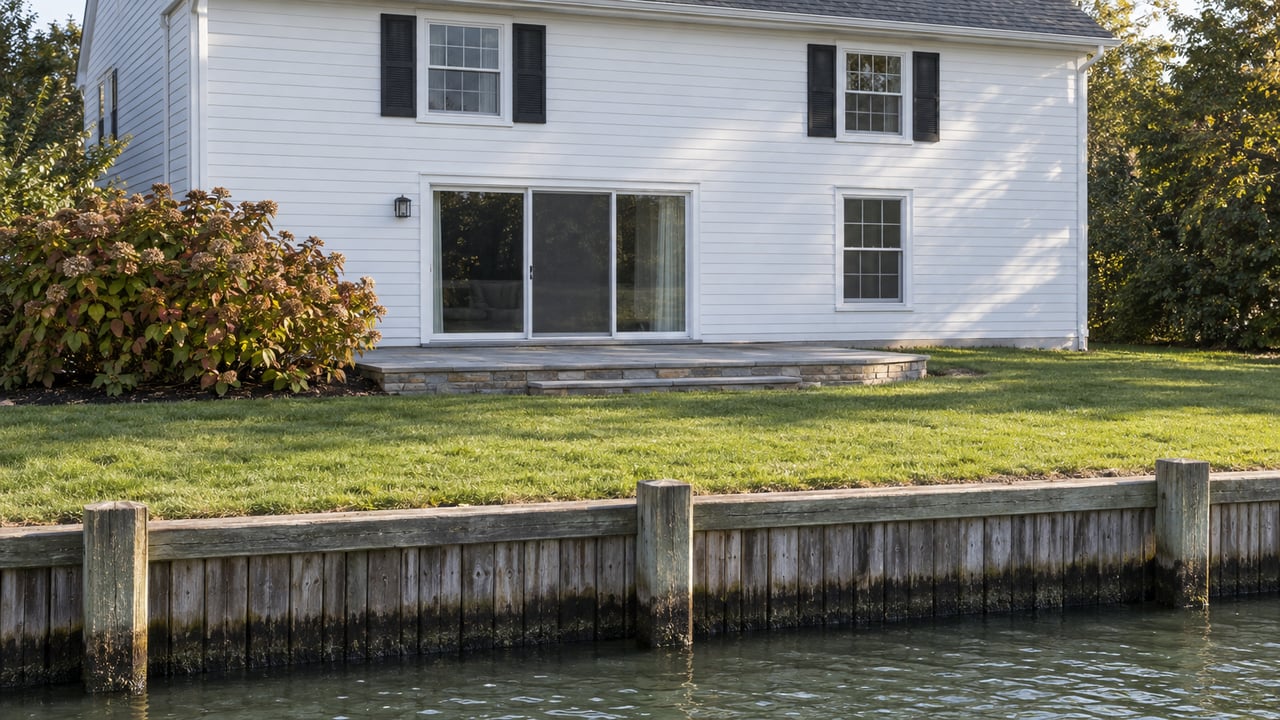
The friction plays out differently depending on where in the village a home sits. Older sections like President Streets carry more mid-century housing stock, where a finished basement or added second kitchen is more likely to predate any permit record. Waterfront pockets like American Venice tend to have newer or rebuilt construction, often raised for flood compliance, which puts more of that stock past the 2008 cutoff for two-family eligibility and shifts the relevant permit question toward docks, bulkheads, and other waterfront structures the Building Inspector reviews under the same code. Neighborhoods like Belmont Terrace and The Canals sit somewhere between the two, with a mix of original construction and updated homes that each carry their own permit history.
None of that shows up on a portal listing. It shows up in a CO search at Village Hall, which is why that search belongs at the start of a listing timeline, not the end of one.
The market backdrop makes the timing question sharper. Correctly priced Lindenhurst homes have been going to contract in about 28 to 32 days through 2026, with high-demand waterfront pockets moving in as little as 7 to 10 days, against a median sale price running in the high $600,000s, up roughly 5 to 6 percent from a year earlier. Suffolk County's broader median sits near $718,000 for the same period, so Lindenhurst continues to price as relative value within the South Shore. Homes are also trading close to or above asking in many cases. A home that opens escrow with a clean CO file can move inside that window. One that surfaces a missing Certificate of Occupancy mid-contract does not, and that gap is where deals lose momentum or renegotiate price.
The fix is straightforward even if the process isn't. Before a home goes on the market, a CO search through the Village Building Department tells you exactly what's on file and what isn't. If a second kitchen or finished basement needs to go through the Two-Family Review Board, that hearing calendar needs room to work, and it works far better as a pre-listing step than as a contingency negotiated under a ticking attorney review clock.
If you're weighing a sale in Lindenhurst, or wondering what a specific address's permit history actually looks like, Kimberly Holland and the team can walk through what a Village Hall search would show before you ever put a sign in the yard.
Does every home in Lindenhurst need a Certificate of Occupancy to sell? A home with an unrecorded basement conversion, added kitchen, or accessory structure is the situation that needs a Village records check before listing.
What if my basement has a second kitchen but no separate entrance? It's worth a conversation with the Building Department about how the Village treats that setup.
How long does the two-family legalization process actually take? Ask the Building Department about the current process before setting a listing date.
This article is general information, not legal, tax or financial advice. Consult a qualified professional about your situation.
Stay up to date on the latest real estate trends.

We offer unmatched local knowledge, expert negotiation, waterfront expertise, and proven marketing strategies to get homes sold faster and for top dollar.
Get In Touch With Our Team To Learn More

1000 Park Blvd Suite F
Massapequa Park NY 11762