Why Every West Babylon Cape and Ranch Now Has to Answer the Oil Tank Question First
August 27, 2026
August 27, 2026
A seller sits down at the dining room table with an attorney and a stack of paper. Somewhere around page four is a form most people have never seen before: New York's Property Condition Disclosure Statement, a long list of questions covering the roof, the basement, the wiring, and eventually, petroleum products. The seller pauses. The house has had gas heat for as long as anyone in the family can remember. But the house was built in the 1950s or 60s, and gas wasn't standard then. Was there ever an oil tank in the ground? Nobody currently living in the house actually knows.
Until March 20, 2024, that pause didn't matter much. New York had allowed sellers to skip the disclosure form entirely by crediting the buyer $500 at closing instead, an option on the books since 2002 that became the default move in many markets for anyone who didn't want to put answers in writing. An amendment to Real Property Law Article 14, effective that day, closed the door on the credit. The form is no longer optional. Every seller of one to four family residential property in New York now has to complete it, including the section that asks directly about petroleum products, home heating fuel, and substances that may have been spilled, leaked, or released on the property.
That change lands everywhere in the state. It lands differently in West Babylon.
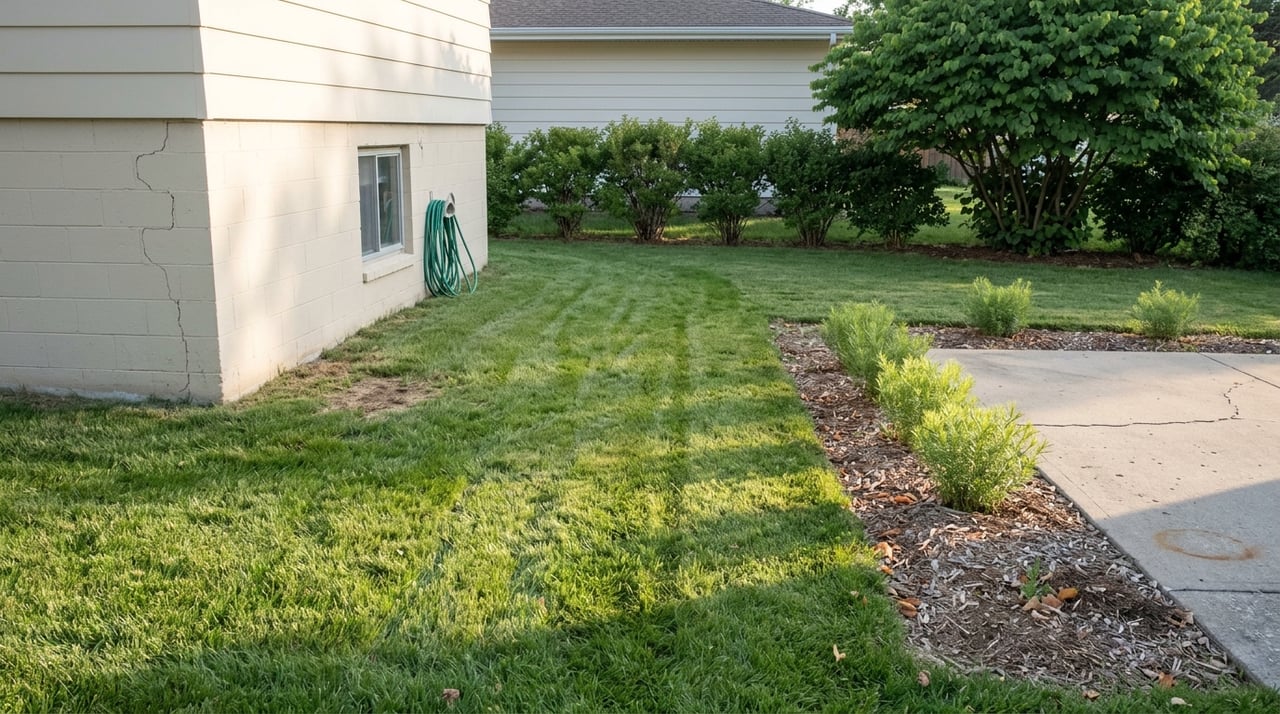
West Babylon's housing stock didn't happen gradually. The Town of Babylon's population went from 45,556 residents in 1950 to 142,309 by 1960, a postwar building boom that filled the grids between Sunrise Highway and Montauk Highway with Cape Cods, ranches, hi-ranches, and the split-level hybrids known locally as splanches. Most of that construction happened before natural gas lines reached these blocks, which means most of these homes started their lives on oil heat, delivered from a tank buried in the side yard or under the driveway.
Some of those tanks were properly closed when the house converted to gas. Some were filled with sand and left in place with paperwork nobody kept. Some are still down there, forgotten by owners who bought the house decades after the conversion happened and never had a reason to ask. A seller doesn't need to have caused the problem to be the one answering for it on a signed disclosure form.
This is the part that catches people off guard: the seller isn't required to have any special knowledge before signing. The form only asks what the seller actually knows. Answering "unknown" is legitimate when it's true. But an attorney reviewing a stack of "unknowns" across an entire environmental section reads differently than a seller who did a $200 sweep beforehand and can point to a clean report. One looks like due diligence. The other looks like a seller hoping nobody asks a follow-up question.
Here's where the obvious story and the actual story split. Suffolk County's Sanitary Code, Article 12, does regulate underground storage tanks, and it does require periodic testing, roughly starting once a tank has been in the ground about a decade and then every five years after that until the tank is permanently closed. Sellers who know this rule exists sometimes assume it means their home heating tank has already been tested, tracked, or otherwise accounted for by the county.
It usually hasn't. That testing requirement is built around larger facilities, and the county's own residential tank closure incentive program draws the line at 1,100 gallons, offering a $100 rebate to homeowners who properly close a tank at or under that size once they submit proof to the Department of Health Services. Most residential heating oil tanks fall well under that threshold, typically in the 250 to 1,000 gallon range. Which means the county testing cycle that sounds so official mostly doesn't apply to the tank sitting under a West Babylon lawn. The rule that actually reaches every seller regardless of tank size isn't a testing statute at all. It's the disclosure question, and since March 2024, there's no longer a $500 way around it.
| What sellers assume protects them | What actually applies |
|---|---|
| Suffolk County periodic testing, every 5 years | Mostly governs tanks over 1,100 gallons; most home tanks are smaller |
| "I can just pay the credit instead" | Removed statewide, effective March 20, 2024 |
| "Nobody will ask if I say unknown" | Legitimate if true, but a blanket pattern invites scrutiny |
An electronic tank sweep, the kind that uses a magnetic locator to check for fill pipes, vent lines, or a buried tank shell, typically runs in the $200 to $250 range. That's the number a seller is weighing against the other one: cleanup after a confirmed leak commonly runs $20,000 or more, a cost that standard homeowners insurance often won't touch because of pollution exclusion clauses written into most policies.
There's a third number that matters more than either of those to a seller trying to close on schedule. Lenders on Long Island generally will not approve a mortgage on a property with an unaddressed underground oil tank, which means a buried tank discovered mid-contract doesn't just complicate a negotiation, it can stall the financing entirely while the tank gets swept, tested, or removed under supervision. A seller who handles this before listing controls the timeline. A seller who finds out during attorney review is negotiating from a house already under contract, with a closing date now hostage to a permit application.
If removal turns out to be the right call, permit fees through the local building or fire department typically fall between $50 and $200, and New York State DEC requires the work to be done by a licensed professional following state and OSHA guidelines. None of this is expensive relative to the alternative. It's just work that has to happen on a timeline the seller chooses instead of one a buyer's attorney sets.
The practical sequence is simple, even if the paperwork behind it isn't. Before a West Babylon listing goes live, it's worth finding out whether a tank is or ever was on the property, either through a sweep or through documentation if a prior owner already closed one out. If a tank turns up, the decision about closure versus removal happens on the seller's schedule, not squeezed into a 10-day inspection period. Only after that does the disclosure form get filled out, and by then every answer on it is something the seller can actually stand behind instead of guess at.
That order matters more than it used to. For twenty-two years, the old $500 workaround let sellers treat the entire disclosure conversation as optional. It isn't anymore, and for a town built almost entirely in the decades when oil heat was standard, that single change in state law turns a form most people used to skim into something worth handling before the first showing, not during the last week of due diligence.
My house has had gas heat for years. Could there still be a buried tank? Yes. Many West Babylon homes converted from oil to gas decades ago, and the original underground tank wasn't always removed, sometimes it was drained and abandoned in place instead. A sweep is the only reliable way to confirm one way or the other.
What if a previous owner removed the tank but I don't have the paperwork? Answering "unknown" is appropriate if that's genuinely the case, but it's worth checking with the Town of Babylon or Suffolk County Department of Health Services first, since closure records are sometimes on file even when the current owner never received a copy.
Does any of this apply if I'm selling a co-op or condo? The underground tank question is specific to properties with their own heating systems and grounds, so it generally doesn't apply to co-op or condo units, though the broader disclosure form still covers the unit itself.
Can I sell the house "as is" and skip dealing with the tank question? An "as is" sale doesn't remove the disclosure requirement. The form still has to be completed and signed. What "as is" affects is repair negotiations after issues are found, not whether the seller has to answer the questions honestly in the first place.
If you're planning to list a West Babylon home built in that postwar wave and want to know where you stand before a buyer's attorney raises the question, Kimberly Holland and the Kim Holland Homes Team can walk through what your property's history actually requires and get the paperwork right from the start.
Stay up to date on the latest real estate trends.






We offer unmatched local knowledge, expert negotiation, waterfront expertise, and proven marketing strategies to get homes sold faster and for top dollar.
Get In Touch With Our Team To Learn More

1000 Park Blvd Suite F
Massapequa Park NY 11762